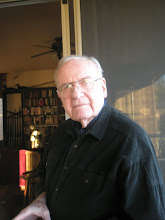
In a
recent article, by Paul Goble, the former head of the KGB analysis division,
Nikolai Sergeyevich Leonov (aka N.L. Staunton) who purportedly held the rank of
Lt. General, is said to have lamented the breakdown of coordination within his
old organization between analysis and operations. He went on to say that this
is one of the reasons for loss of Russian influence throughout areas of
previous domination such as Crimea, the Ukraine and even the Russian Far East.
While there may be no reason to quibble over his view of the diminished
international influence of Russia relative to earlier times, their more recent
operations in the United States have been of high quality. The results may not
have been what Leonov would declare “conspicuous”, but then he appears to be
looking backward to the Soviet days of Kim Philby, Alger Hiss and others of
that earlier era when it comes to activities against the West.
The
fact is that the United States is a “target rich” environment in which to
pursue many phases of political and economic activity. Retired and even active
politicians are easily available for unwitting (and unfortunately sometimes
even witting) information gathering as well as positive influence on key and
useful issues. Ultimately that is just the relatively easily accessible manner
in which the American system works. Domestic and foreign interests for many
decades have gained support for their chosen projects. Any of these mechanisms
provide excellent cover for political action and information gathering. Of
course, no one in Washington wants to admit this.
While
the Russian secret services suffered a severe blow back in 1985 with the
exposure of Oleg Gordievsky (former KGB Chief of Station in London and an
eleven year British SIS {MI-6} asset) along with the earlier uncovering of the
defection of key GRU officer, Col. Oleg Penkovsky, the complete reorganization
of the Russian secret service has occurred since then. The most conspicuous
aspect of the reformation has been the rise of the previously named GRU (now
simply GU). This formerly military-focused organization now has a far broader
mandate. This includes matters ranging from international political penetration
through the now well-known St. Petersburg cyber operation to space-related
technology. This latter charter traces its derivation all the way back to WWII
when signals intercept (sigint) was a major element of GRU responsibility.
The
real problem with which Russian intelligence of any nomenclature is faced is
effectively an embarrassment of riches. The departure of the previous
Washington Administration and the concomitant unrelenting distaste of its
replacement by the ousted party has provided an all too fertile ground for all
forms of information and covert political action. Moscow is not the only U.S.
adversary who has taken advantage of this circumstance. Actually, the Russian intel
organizations are overwhelmed with current and potential assets. In turn,
hopefully, such a plethora of possible cooperating candidates make for openings
for counter-intelligence activities and exploitation. The result is that the
Russians have gone to rely more on overt sources that are trackable than to one
suspected and possibly penetrated by CI operations. The latter would be
expected to pass misleading information and even gather useful information on
its own account.
It is
in the case of avoiding counter-intel ops that the use of witting and unwitting
intermediaries has become most useful. While journalists of all political hues
are always on guard against being “played” by their own sources, the Russians
have such a large number of unwitting “cooperators” that they can afford to
cross-check information as it is acquired. The key word here is “unwitting”.
One of the basic realities of asset recruitment is to not shy away from possible
higher-level targets. These well-placed individuals often think of themselves
as too astute to be manipulated by a foreign agent. This is exactly the type of
excessive self-confidence that makes them vulnerable to talented
Russian-connected contact.
This
latter situation is what makes experienced civilian business and politically-related
individuals vulnerable targets in themselves. It's a well-recognize failing of top-level
people that they think they are too experienced to be out-smarted. Any “con
man” loves to deal with a “mark” who thinks he is too smart to be duped. Any
veteran “bunko” squad police office knows that. It's a wonder that the vaunted
Washington insider is as unaware as he/she is of the reality of a well created
“con”.
One
of the principal obstacles faced by Russian intelligence professionals (or
anyone in a similar circumstance) is to become over confident and thus risk
working a target too hard or fast. This has happened in the U.S. political and
diplomatic sphere when foreign agents – and even some leaders – mistake
American characteristics of openness for vulnerability. It's been part of
American mythology for years that “country rubes” would be fair game for more
urbane types. The truth is that the more sophisticated the U.S. targeted
personalities think they are (including journalists) the easier the trained
intel personality finds the penetration. Of course, this also tends to work in
reverse, a fact that has resulted in the chagrin of both Russian and Chinese
operatives. It's all part of the old magician’s trick of “watch the hand, watch
the hand.”
There
was a time in the nineteenth century when the manipulation of key individuals
was referred to as “The Great Game”. It was as deadly then as it is now. The
difference lies only in the broader dangers involved. Moscow is very well acquainted with the ploys
and gambits of this clandestine maneuvering. However, the questions exist: 1)
Are the Americans equally cognizant? 2) Has Moscow become a bit over confident
of their own sophistication and experience?
It would appear that both factors are at play! That's why there are
serious shortfalls on both sides of the game. And equally important is for
officers and agents of all major combatants to realize they are not unique in
this ancient and worldwide game.
Comments
Post a Comment